Paddleboarding with Your Dog: A Step-by-Step Safety Guide
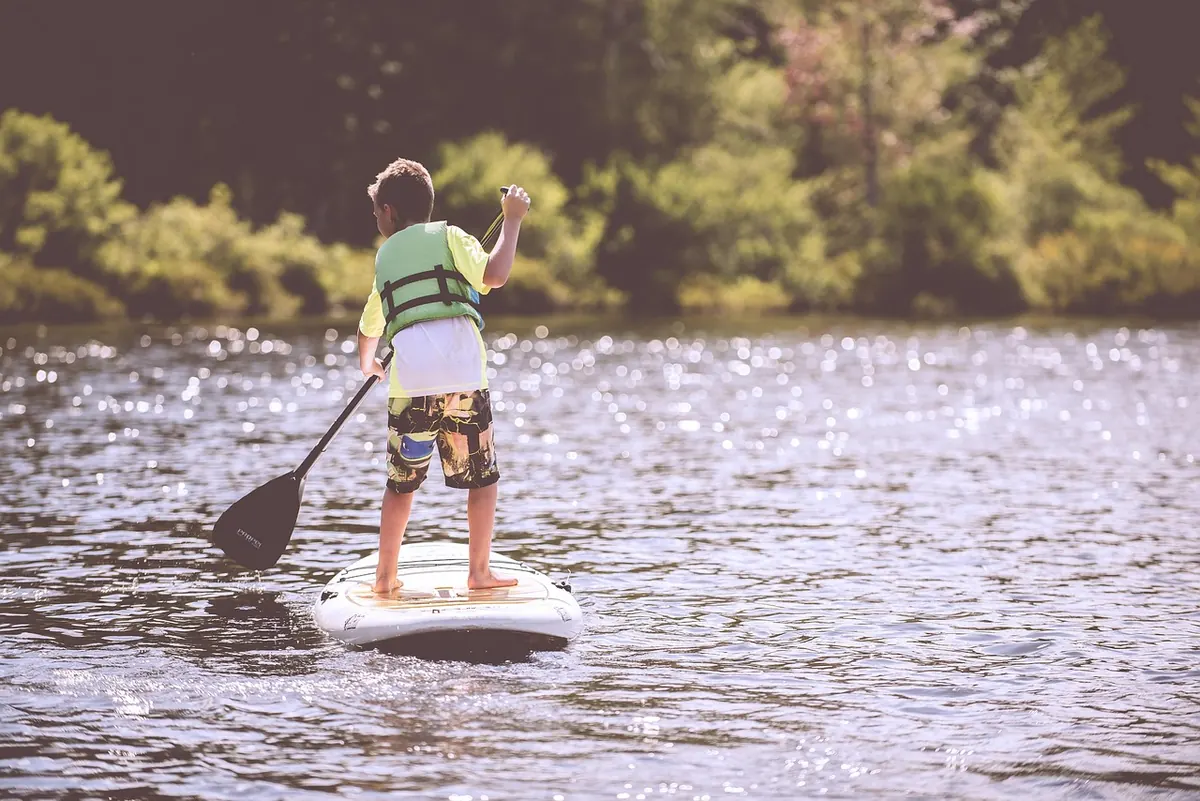
A paddleboard is a brilliant place for a dog to be. It sits low in the water, it has grip underfoot, and it gives them a front-row view of everything happening along the shoreline. What it isn't is a seat they instinctively know how to use. Dogs need walking through the whole thing: the board, the buoyancy aid, the wobble, and the wet bit at the end.
The good news is that most dogs take to it quickly with a bit of patience on land and a handful of short, shallow sessions. Rush them, though, and you'll spend the rest of the summer with a dog who won't go near the water. Here's how to build it up properly.
Not every board makes a good dog carrier. Narrow touring shapes and anything under roughly 32 inches wide will feel twitchy the moment four paws shift position. A wide, thick inflatable is far more forgiving. Look for a generous deck pad with real texture underfoot, because smooth EVA gets slippery once it's wet and claws need something to grip. If you're buying with a dog in mind, choose the board you'd pick for a nervous adult beginner: stable, not fast.
The other essential is a buoyancy aid made for dogs. A human lifejacket won't do — the panels sit in the wrong places, the straps don't hold, and there's no handle where you need one. A proper dog buoyancy aid has a sturdy grab handle across the back, adjustable straps around the chest and belly, and enough flotation to keep the head clear of the water.
Most bad first trips come from skipping this stage. Inflate the board at home and leave it in the garden or hallway for a few days so it becomes furniture rather than a strange, flapping object.
Ten minutes a day for a week does far more than an hour on the morning you actually want to go out. If your dog freezes at step three, stay there a few days. There's no schedule to keep.
A buoyancy aid that's too loose will ride up around the neck once the dog is in the water; one that's too tight will rub under the front legs and put them off wearing it at all. Fit it on dry land, then check it again once it's wet, because straps and fabric behave differently in water.
Have them wear it around the house for short spells, then on a normal walk, then at the water's edge. By the time it matters, it should be thoroughly boring.
Pick genuinely flat water: a sheltered lake, a canal basin, a quiet harbour or a bay on a still morning at high tide. You want no wind pushing you offshore, no current, no swell, and shallow water you can stand up in. Avoid busy slipways, fishing spots and anywhere with moving boat traffic.
Launch from the shallows. Get on the board first, on your knees, with a helper holding it steady if you can. Then give your cue and let the dog walk on themselves, aiming for the middle of the board just in front of you. Give them room to sit or lie down.
Stay on your knees for the first few trips. Standing changes how the board behaves underfoot, and that's a lesson best saved until the dog is completely relaxed about the movement. Paddle a short loop close to shore, keeping the beach within easy reach.
Keep sessions to ten or fifteen minutes and finish while your dog is still enjoying it. If they're shifting about, panting hard, or looking for the nearest exit, head in. Break the trip up with rests on shore, and don't combine the first outing with a long swim or a big walk.
Assume it will happen and rehearse it in shallow water before you need it. Most dogs swim towards the shore rather than back to the board, so stay calm, use your cue, and keep your voice light.
With a big dog, lifting them out by the handle alone isn't realistic. Move to water shallow enough to stand in and lift from there, or ask someone on shore to help. And practise your own self-rescue without the dog first, so you know you can get back on before you're managing two of you.
Dark deck pads get very hot in direct sun, and paws burn faster than you'd expect. Go early or late, or choose an overcast day, and check the deck with the back of your hand before your dog steps on it.
Water quality matters more when a dog is on board, because dogs drink as they paddle. Avoid scummy, discoloured or stagnant water, and keep well clear of any water with a visible algal bloom. On the coast, salt water swallowed in quantity can upset a dog's stomach, so take fresh water and offer it often. Watch out too for discarded fishing hooks and line, broken glass near slipways, and jellyfish in warm weather.
Give wildlife space — nesting birds, seals and their pups, and anything basking on a bank will all react badly to a curious dog. If your dog is elderly, or has a heart, breathing or joint condition, speak to your vet before you start paddleboarding with them.
Rinse the dog and the kit with fresh water after every saltwater session, dry the buoyancy aid thoroughly, and check pads and armpits for small cuts. Load the board carefully rather than letting it clatter down beside a tired dog.
Then build slowly. Five short, successful trips will teach your dog more than one long, stressful one, and a dog who associates the board with treats, calm water and an early finish is a dog who'll happily come back for more.
Photo: Pexels / Pixabay
Previous Post
5 Common Mistakes Beginner Surfers Make at UK Beach Breaks
Next Post
When and Where to See Basking Sharks in the UK